As we approach the 40th anniversary of the greatest season in Oxford United’s history, it feels only right to look back on those remarkable days. It was a time when the Club redefined what could be achieved by a team from outside the nation’s traditional footballing strongholds.
After dominating the Second Division in 1984/85, scoring 84 goals and winning 25 of their 42 matches, the U’s secured promotion by a commanding ten-point margin, clinching the title by two points ahead of Birmingham City. It marked a historic moment, as Oxford United reached the First Division, the top tier of English football, now known as the Premier League, for the very first time.
Despite back-to-back promotions and the excitement of top-flight football, the new season began with uncertainty. Jim Smith departed to take up the managerial role at Queens Park Rangers, leaving the Club without a manager and contributing to a difficult start, with just one win from their opening nine league games.
A welcome distraction arrived in the form of the League Cup. Entering the competition in the second round, then played over two legs, United were drawn against Northampton Town, with the first leg taking place on Wednesday 25 September 1985. It was a competition in which the U’s had enjoyed memorable success in recent seasons, then known under its sponsored title, the Milk Cup.
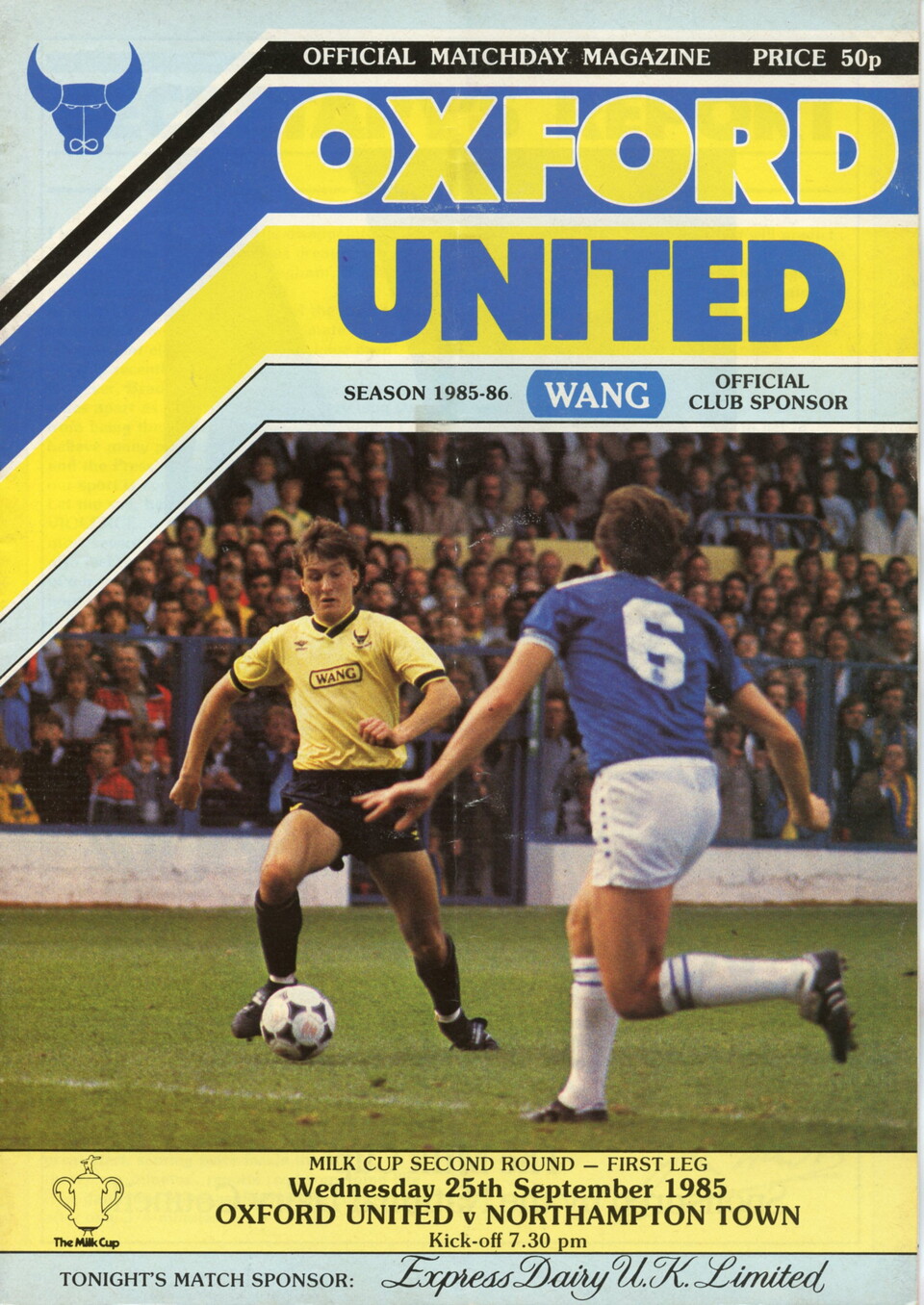
On the eve of the game, reports emerged that the U’s were exploring a move to bring Phil Neal, formerly a Northampton Town player incidentally, to the Manor, potentially as a player-coach or even player-manager. The idea had first surfaced in the summer, after Neal missed out on the Liverpool job to Kenny Dalglish. Although nothing ultimately came of it, the speculation proved an unwelcome distraction in the build-up to the cup tie.
That uncertainty, coupled with fading confidence following recent First Division results, left Oxford vulnerable to a dose of their own giant-killing medicine in the first leg at home to Northampton Town.
The tension soon began to show. Murmurs of frustration rippled around the ground when Northampton took the lead after 20 minutes. In keeping with Oxford’s recent misfortune, Gary Briggs was off the pitch with concussion when Ian Benjamin forced his way through to score for the visitors.
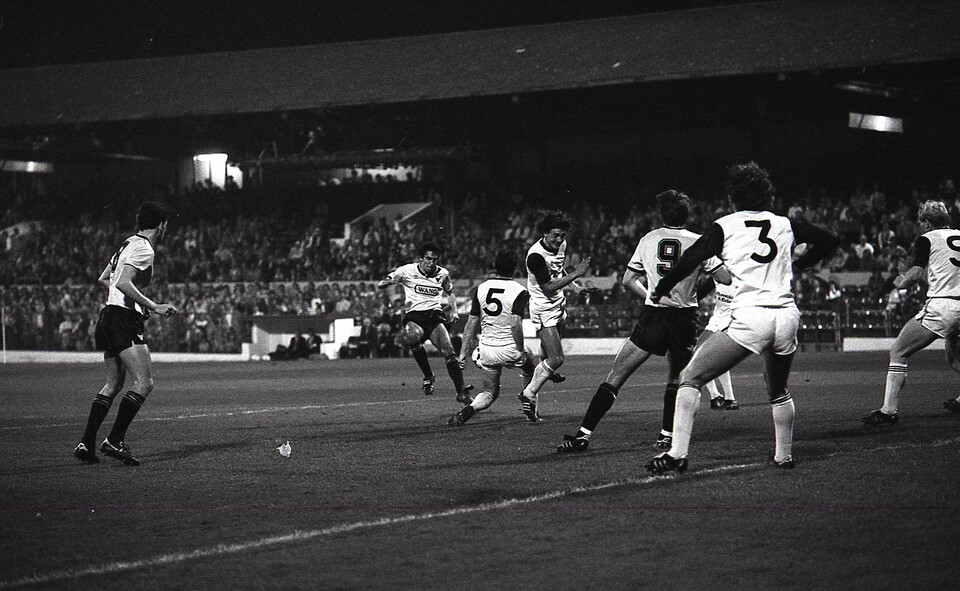
Crucially, Peter Rhoades-Brown was on hand to scramble home a close-range equaliser just before half-time, easing the tension around the ground. United improved after the break, but Northampton Town remained resolute, determined to hold on for a draw.
It was new signing Ray Houghton who finally made the breakthrough, striking the winner in the 74th minute. From there, the hosts saw the game out, though a tricky second leg still loomed. It might have been a very different story, however, had Northampton’s Phil Cavener not fired an 85th-minute penalty wide, a let-off that was not lost on manager Maurice Evans, who admitted: “We were very fortunate to come out of that with a victory. Northampton put us under pressure all the way through, made things difficult for us and deserved to get something from the match.”
Perhaps in the modern era, a newly promoted top-flight side might rotate heavily for the second leg and accept an exit in order to “focus on the league.” In 1985, that mindset simply didn’t exist. Not only did the U’s have a proud recent record in the League Cup to uphold, but the prospect of losing to lower-league opposition still carried a real sense of jeopardy.
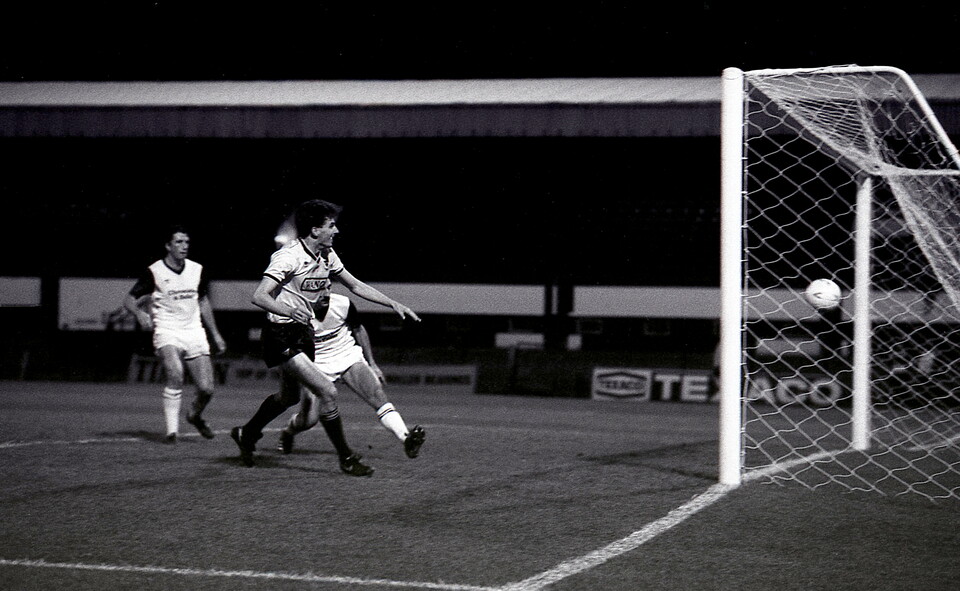
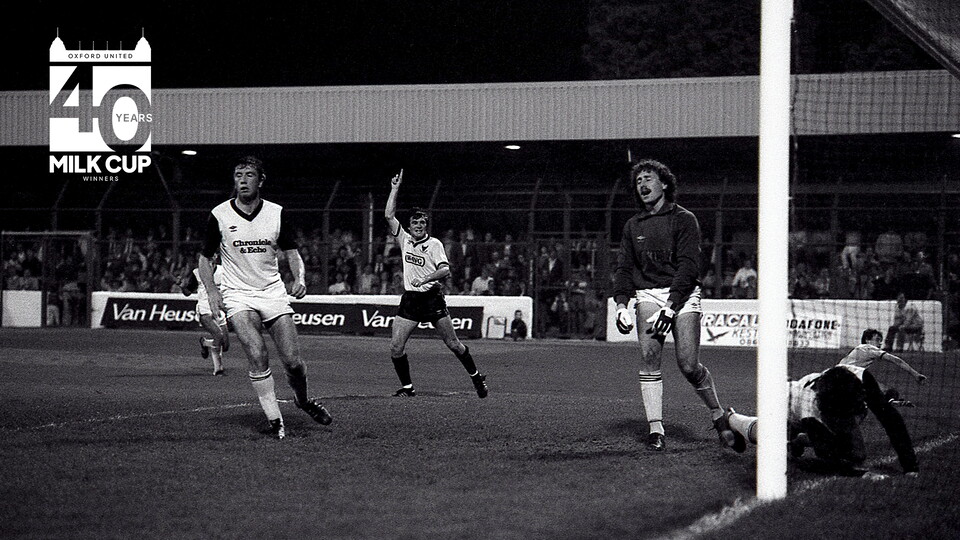
With the game still goalless at the break, the tie hung firmly in the balance. But, as so often in those days, the moment called for John Aldridge, and he delivered. Striking twice in the space of just three second-half minutes, Aldridge’s clinical finishings secured a 2–0 win on the night and a 4–1 victory on aggregate for the Yellows. While the scoreline may have flattered them slightly, it proved a significant morale boost, setting up a third-round meeting with Newcastle United at the Manor Ground.
Images: Steve Daniels