After a sensational cup run and epic semi-final victory against Aston Villa, Oxford United had reached a senior cup final for the first time in their history. They would take on a QPR side who had sprung a major cup upset in their semi-final, beating Liverpool to earn the right to compete for the Milk Cup trophy at Wembley Stadium.
A lot has changed in 40 years. Oxford United have seen several promotions and relegations through the leagues, the United Kingdom has had 10 different Prime Minister's and technology has become a focal point of the daily life of the human race, to name a few. The iconic Wembley Stadium has also seen great change, with the Old Wembley demolished in 2003 and the new Wembley, complete with a brand new arch, opened in 2007. The pinnacle of the game since its original opening in 1923, Wembley was a stadium that you could struggle to imagine ever reaching, particularly for a smaller club like Oxford United that just three years previously had been playing the likes of Scunthorpe United, Leyton Orient and Port Vale in Division Three.
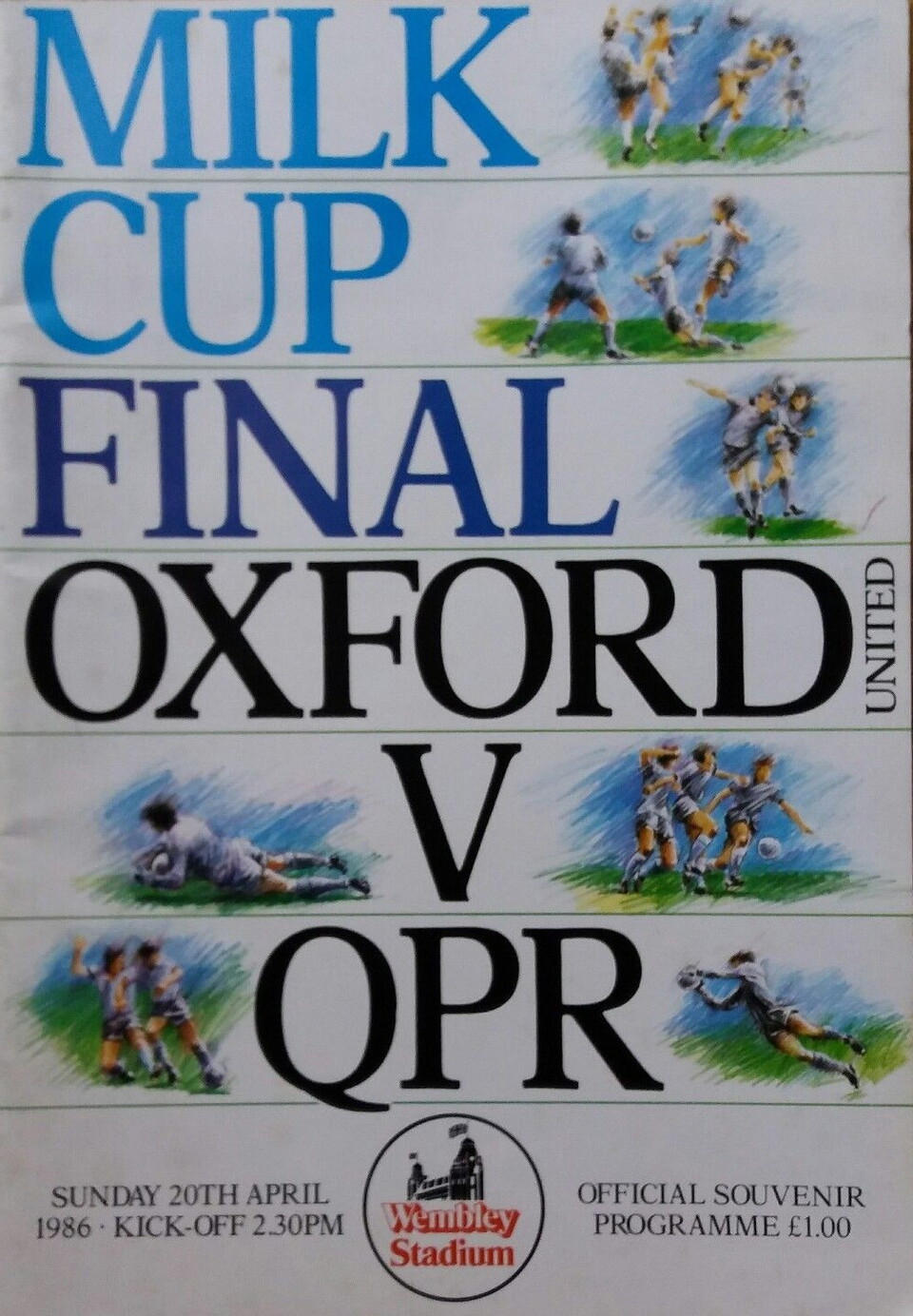
Wembley Stadium was the home of English football, staging only international matches, the FA Cup final, the League Cup final, and that was it. No semi-finals, no play-off finals. Reaching Wembley is still a dream for any fan and any footballer today, but your chances of doing it were much slimmer in 1986.
And if you were Oxford United, only a league club from 1962, in your first ever season in the First Division, it seemed remoter still. But such were those golden years in the mid 1980s that on 20 April 1986, the U’s were at Wembley, taking on Queens Park Rangers, and former boss Jim Smith, in the League Cup final. Such riches did the sponsorship from the Milk company bring with it that the winners would take home a cheque for £72,000, the biggest team prize in British sport at the time.
United boss Maurice Evans had decisions to make with regards to his team selection. Jeremy Charles and Billy Hamilton were going head to head for a place alongside John Aldridge, while Peter Rhoades-Brown was absent through an injury suffered in the weeks leading to the game and would miss out on the final. A great shame given his excellent form during the run to the final.
There was a further complication for Evans to consider with new signing Steve Perryman cup-tied for the final. Kevin Brock looked favourite to replace him. With only one substitute per team allowed at the time, selecting a squad was a difficult task for any manager.
When asked whether the squad were feeling nervous ahead of the game, captain Malcolm Shotton insisted that the players weren’t feeling any nerves, but were simply looking forward to a break in the First Division routine. “Every time we run out to play in the league, the boys are a little tense and anxious. We know we cannot afford to lose and that can make us a little jumpy. Tomorrow we shall go to Wembley for a one-off match and will probably be so relaxed we shall play above ourselves. We shall forget all about our league problems and just enjoy the occasion. We don’t fear (Queen's Park) Rangers.”
Heading to Wembley, QPR were the favourites to win, not least after defeating Liverpool to reach the final. More than that, they were 13th in Division One compared with Oxford’s 20th, and they had collected 16 more points. Rangers had won the league game at Loftus Road 3-1, while the teams had fought out a classic 3-3 draw at the Manor Ground just three weeks earlier. But Jim Smith was preparing for an uncomfortable afternoon. “If I’m honest, I would have preferred another team in the final – any other team. That would have made it a little bit easier for me because I want to win so much, and if I win, I hurt Oxford.” Smith was also well aware of the threat United’s players could pose having managed most of the squad during his time at the Manor.
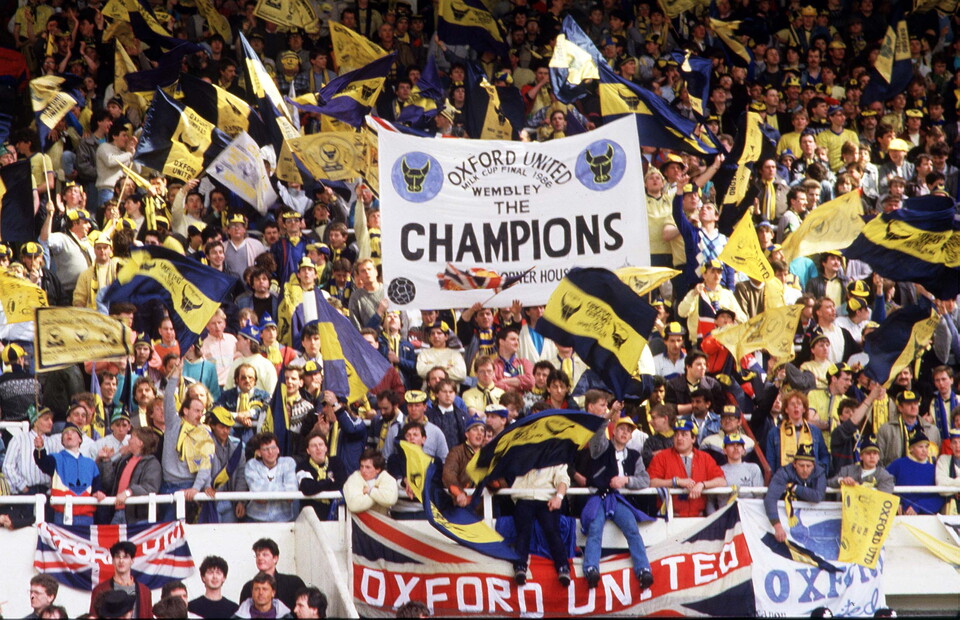
With 90,396 packed in on a bright afternoon, and an incredibly vibrant sea of yellow and blue waves through the terraces, the signs were good from the first kick of the ball. United looked composed and at ease with the occasion.
As you might expect, the early exchanges were cagey, but as the first half wore on the U’s began to be more adventurous in possession. United had the first real chance of the game on the half hour. Trevor Hebberd cleverly turned away from his marker in midfield and, with the outside of the right boot, threaded a ball behind the Rangers defence for John Aldridge to run onto. He was set to pull the trigger, only to be denied by a brilliant recovering tackle from QPR full-back Steve Wicks. The Yellow Army went up as one, screaming for a penalty, but there were no complaints from Aldridge and the referee waved play on.
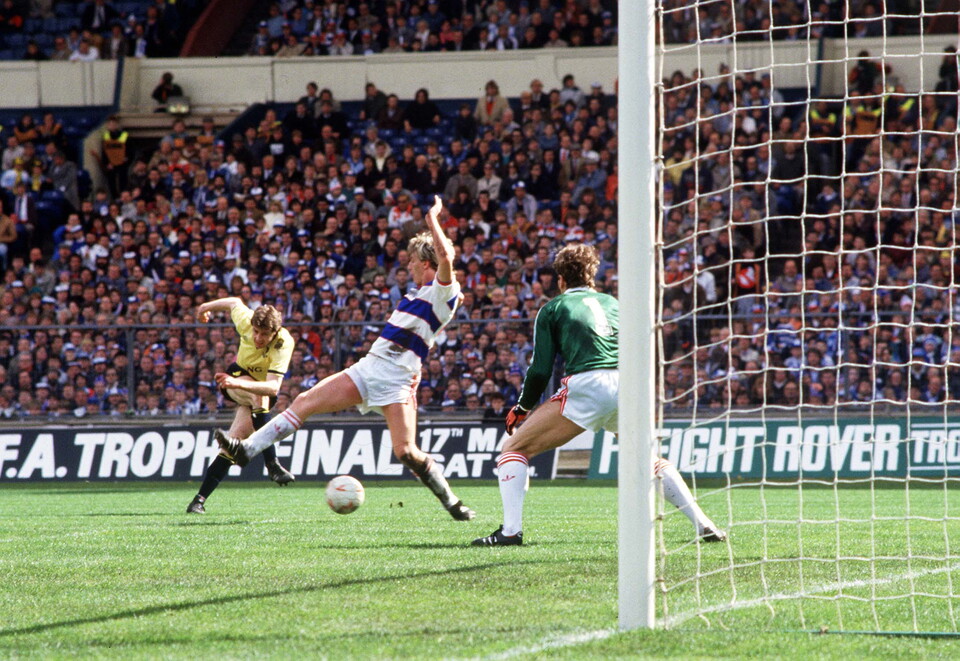
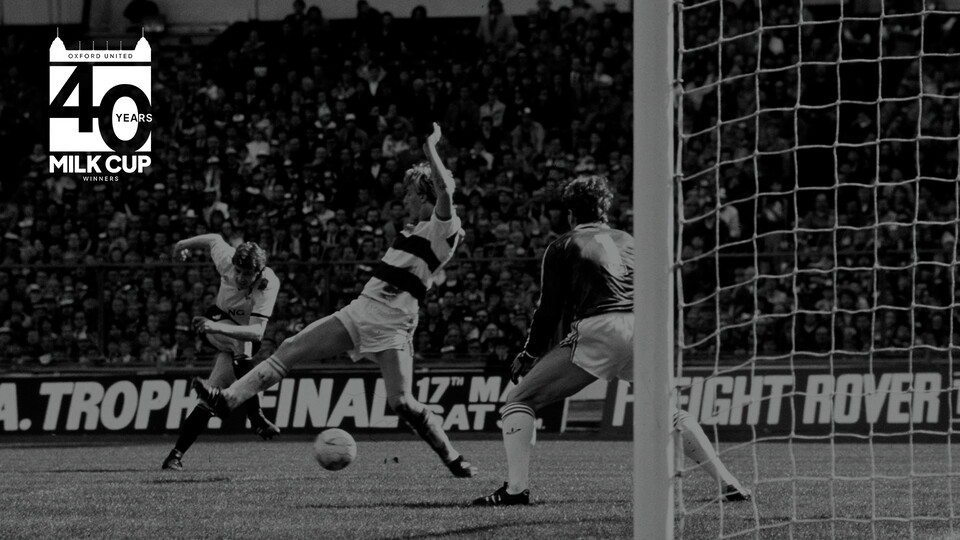
It was clearly evident that the Yellows were starting to take control, and U's fans even began chanting: "We're gonna score in a minute!", and with just five minutes to go until half time, that chant came true! John Trewick drove forward with the ball from inside his own half and sent the ball long for Jeremy Charles. He flicked his header on to Aldridge, who shovelled the ball into the path of Trevor Hebberd, who accelerated away into the Rangers box. With QPR centre-half Alan McDonald bearing down on him, he cleverly turned inside and, from a tight angle, drilled the ball through McDonald’s legs and past Paul Barron in the Rangers goal at the near post.
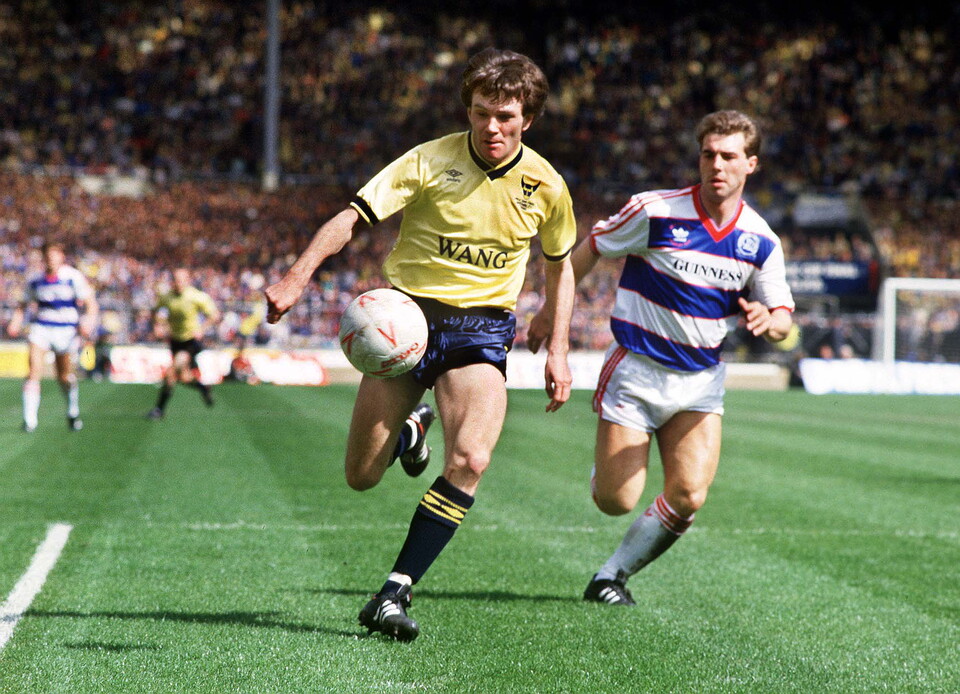
High on confidence now, the U’s started the second half brightly, penning Rangers back and giving them no encouragement. There was less encouragement yet for Jim Smith’s men after 52 minutes, as United deservedly doubled the lead. Collecting the ball deep in his own half, Hebberd played a neat pass into Ray Houghton. The two moved forward in parallel, a dozen yards into QPR’s half. The ball eventually fell for back to the Irish international who clipped a first time shot over Barron and into the back of the net. United had one hand on the cup and the fans were in dreamland.
Rangers almost had a goal back within just a couple of minutes. A free-kick on the left was headed back across goal by Wicks. Alan Judge went up to claim and was challenged by McDonald, forcing the United keeper to be stranded. However, Judge recovered quicky from his tumble to make an acrobatic save from John Byrne's fierce strike at goal.
With just over twenty minutes left to play, United thought they had a third to real hammer the nail in Rangers' coffin. Houghton raced forward on the counter-attack and played Les Phillips in behind. He crossed to an onrushing Aldridge at the back post, but the striker was unable to apply the finishing touch to score what would have been his 30th goal of a brilliant season.
The final stages of the game were approaching and the Hoops had clearly run out of ideas. After 86 minutes, QPR could hold back the tide no longer. Aldridge was sent on his way down the right. Reaching the edge of the box, he exchanged passes with Player of the Match Hebberd before launching into a ferocious shot across the face of goal. Barron could only parry, leaving Jeremy Charles with the simple task of placing the ball into the gaping goal to make it three goals to nil.
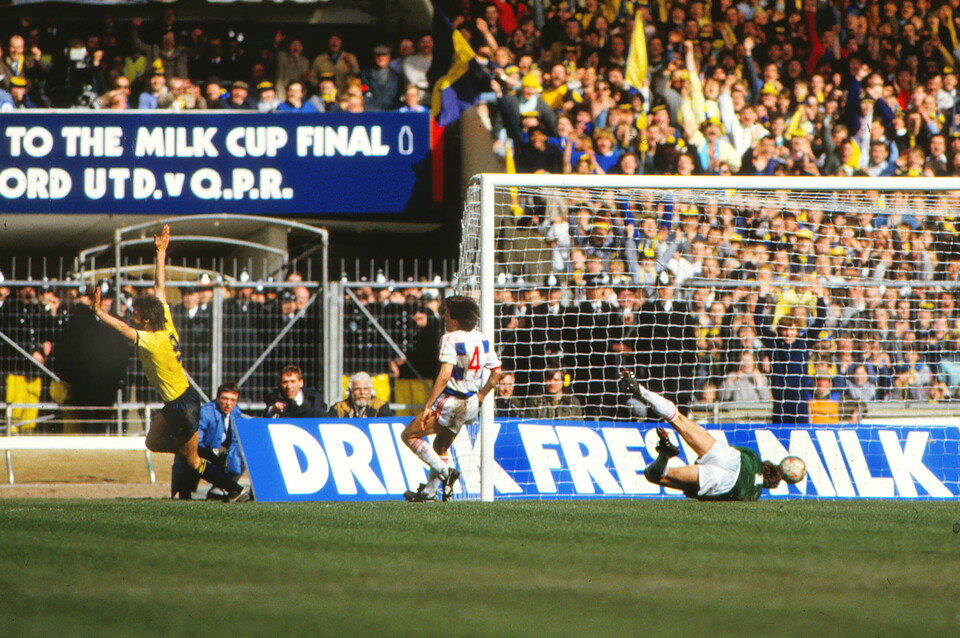
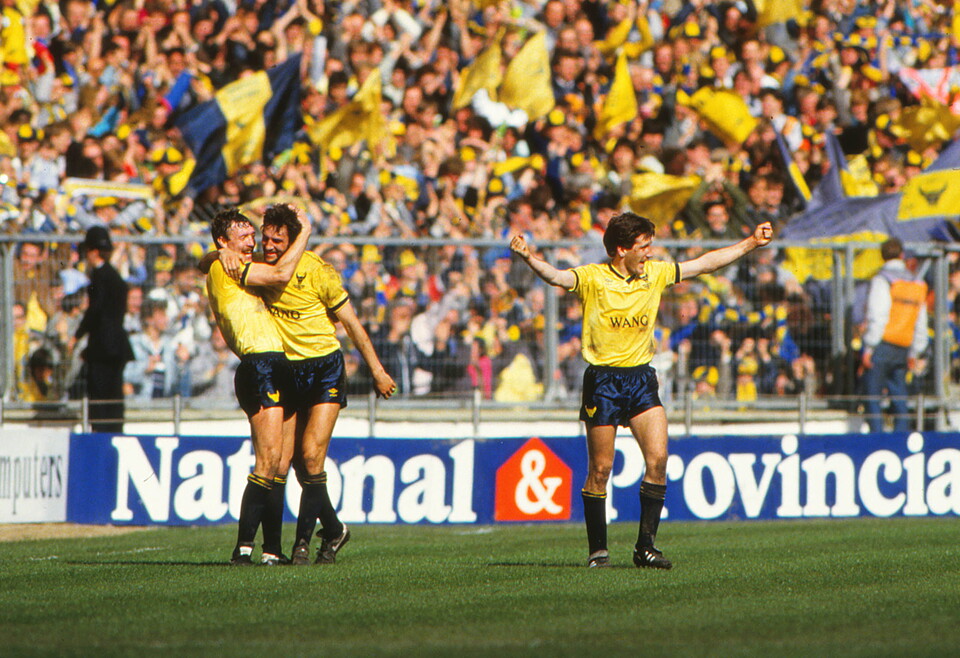
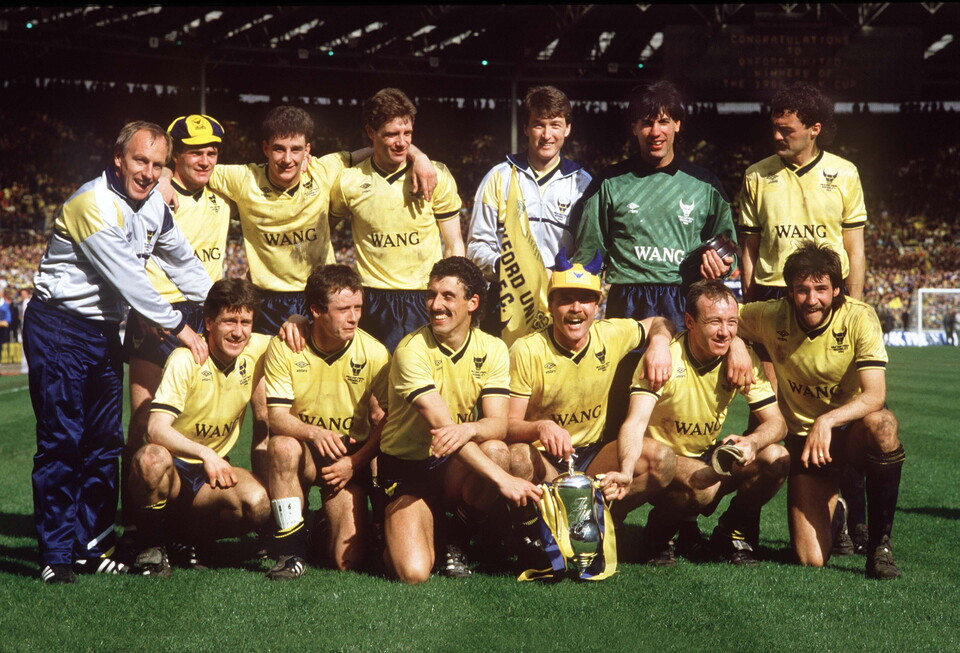
The full time whistle blew moments later and Oxford United had joined the select band of Wembley winners. There were scenes of jubilation from the players, to the staff to the thousands of fans donning the famous yellow and blue in the stands. Against all odd, the U's had won the Milk Cup.
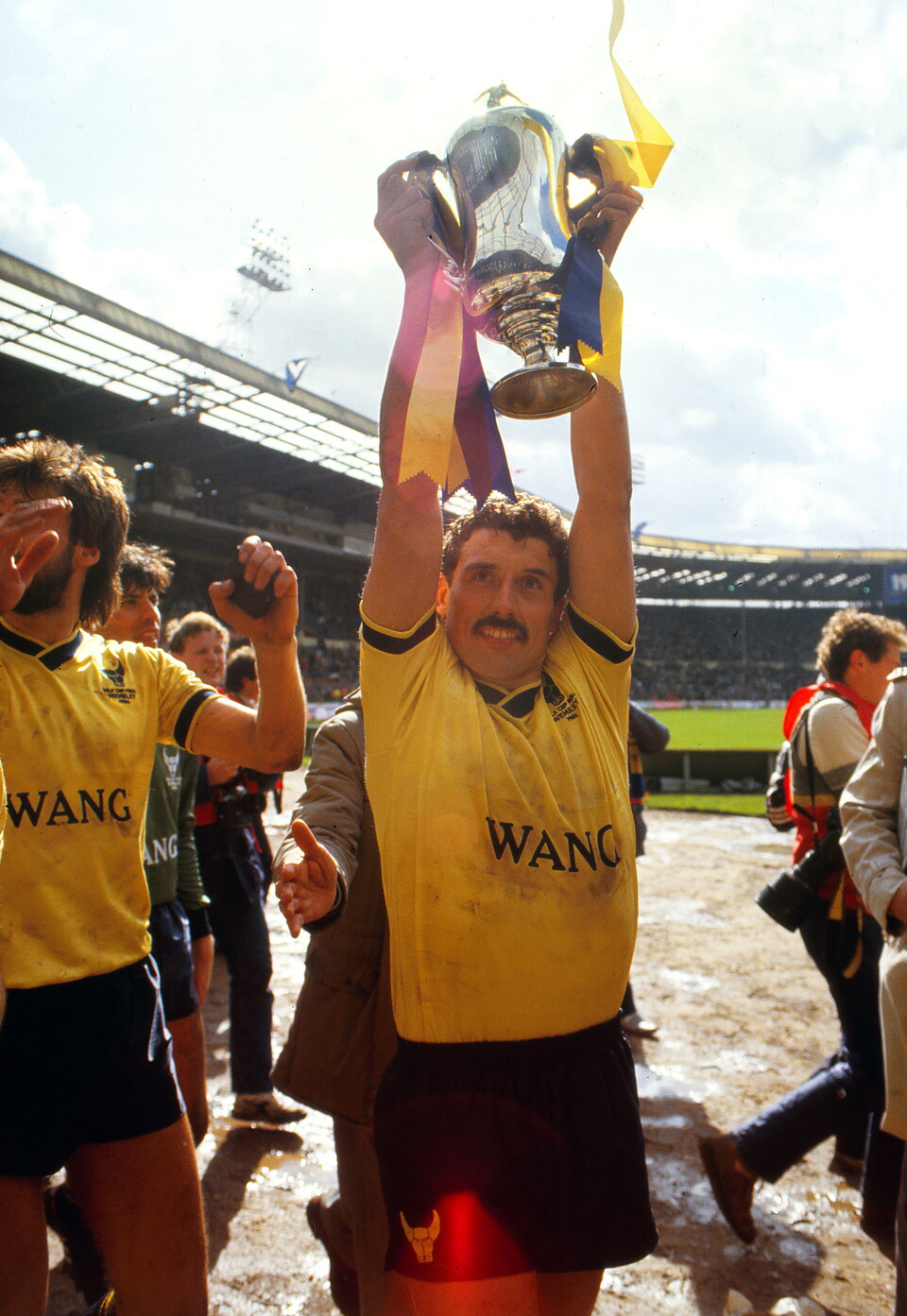
It was left to Malcolm Shotton, resplendent in baseball cap, to lead his weary men up the famous Wembley steps to the royal box and collect the trophy.
Oxford United were the League Cup winners of 1986.
Starting Line-Ups:
Oxford United: Judge, Langan, Trewick, Phillips, Briggs, Shotton, Houghton, Aldridge, Charles, Hebberd, Brock. Sub: Thomas.
Queens Park Rangers: Barron, McDonald, Dawes, Neill, Wicks, Fenwick, Allen (Rosenior 61 min), James, Bannister, Byrne, Robinson.
Attendance: 90,396
Images: Steve Daniels