Our climate is changing. Extreme weather events are becoming more frequent and intense, disrupting football at every level - from grassroots to the World Cup.
This isn’t just an issue for future generations. It’s already reshaping the sport we love. Players are struggling with soaring temperatures, stadiums are being impacted by extreme weather, and fixture schedules are increasingly disrupted as a result.
In 2024, research by Climate X found that climate-related financial losses for 37 major stadiums across the US and Europe are projected to rise from £100 million in 2020 to an estimated £600 million by 2050. That's not some far-off nightmare; it’s within the career span of a player coming through our Academy right now.
Green Football Weekend is an annual nationwide campaign that harnesses the power of football to promote sustainability and climate action. The campaign's message this year is Defend Where Football Lives. And at Oxford United, we're not just backing the message, we’re building a stadium to do just that.
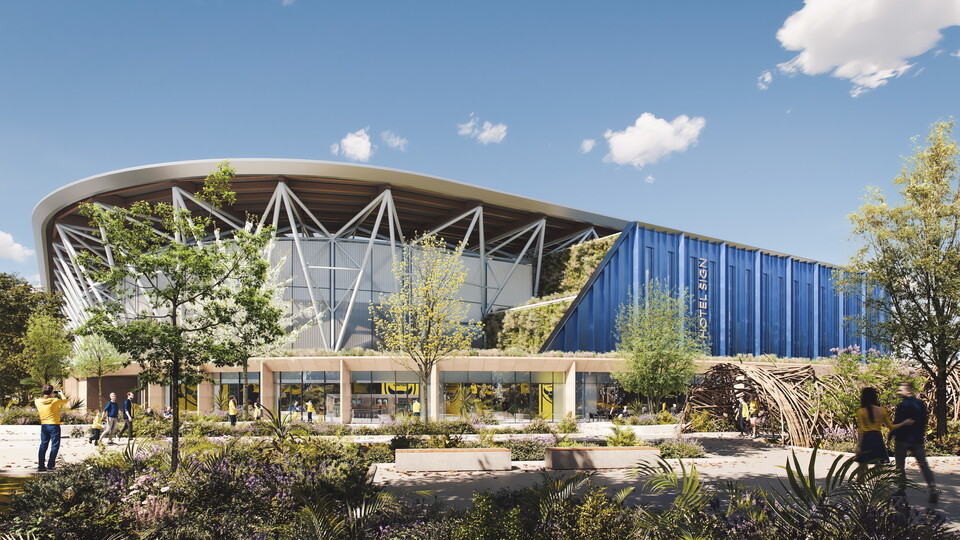
Oxford United’s new stadium, to be built on land to the north of the city, is where that plan becomes reality. It will be the UK's first major all-electric football stadium.
At the heart of the all-electric stadium are air-source heat pumps, which, when combined with a well-insulated building, remove the need for gas. The result: an estimated 80% reduction in carbon emissions per year compared with gas boilers.
Additionally, at least 3,000 square metres of solar panels on the roof (roughly the size of a half football pitch) will generate clean electricity on-site. That’s Oxford United showing what’s possible.
In terms of what the stadium will be made of, the roof will be timber rather than steel where possible, and the structural frames will be kept lean. Making steel and concrete produces large amounts of carbon emissions. By choosing carbon-efficient materials, we will be reducing our impact on the climate.
We’ve also considered how supporters will get to the stadium. Our new stadium will be located right next to Oxford Parkway station, and the project will deliver significantly improved transport connections. Up to 90% of journeys to and from the stadium have the potential to be made by sustainable transport.
Even if every football club in the country went green overnight, our climate would still be changing. The Met Office's UK Climate Projections (UKCP18) Headline Findings are clear: we face "an increased chance of warmer, wetter winters and hotter, drier summers along with an increase in the frequency and intensity of extremes”. Anyone who's watched a match get called off to a waterlogged pitch over the last few months knows this isn't just a projection, it's already happening! And unfortunately, this trend will continue over the forthcoming decades.
Flooding is one of the biggest threats to football grounds in the UK. The new stadium will have a drainage system designed to absorb and slow down rainwater on site. There will be rain gardens to the east, swales to the south, ponds, and carefully designed landscaping to soak up heavy rainfall like a sponge and help prevent surface water flooding. Rainwater will also be harvested and stored in tanks to the west, where it will be reused to irrigate the pitch and reduce overall water consumption.
Parts of the stadium will be covered in green roofs and a green wall. They might sound like a nice extra, but they'll do serious defensive work by insulating the building, absorbing rainwater, and creating habitat for wildlife.
We've also committed to a positive Biodiversity Net Gain on site. What that means is the project will help deliver significantly more nature on and around this site than there is today. New trees, wildflower meadows, ponds, special gardens, and so on. A healthier natural environment is a tougher one. It handles storms better, copes with heat better, and supports the kind of ecosystem that keeps the whole area resilient.
Climate change isn't something that happens to other people in other countries. It's happening to football, right here, right now. Fixtures are being postponed. Training grounds are flooding. Seasons are being disrupted.
The new stadium is part of Oxford United's answer to how we’ll defend where football lives. The most sustainable mid-sized sports venue in the country. A stadium that reduces its impact on the climate and defends against what's already coming.
But it’s also about making sure there is always a place for supporters to come together. Because that’s what matters most: the people, the community, and the connections we share through the sport we love.
#GreenFootballWeekend #DefendWhereFootballLives #OUFC
By Johann Hattingh, Head of Climate Transition and Sustainability
Sources:
Climate X, 'Climate-Related Losses for FIFA World Cup Venues by 2050' (December 2024). Full report available at climate-x.com.
Met Office, 'UK Climate Projections: Headline Findings', Version 4 (August 2022). Available at https://www.metoffice.gov.uk/research/approach/index